Cold Exposure: What the Science Actually Says
8/26/2026 · 8 min read
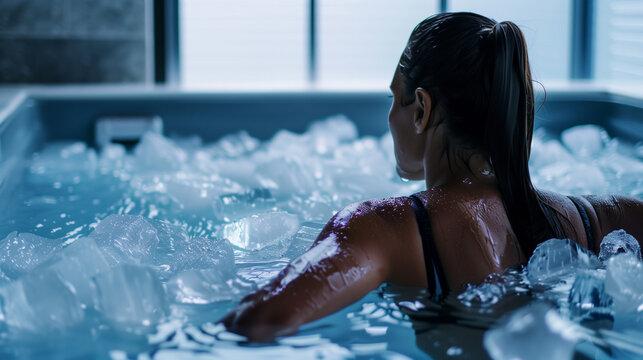
How deliberate cold exposure can boost your immune system, increase dopamine, and build mental resilience.
Cold plunges are everywhere. But beyond the hype, what does deliberately getting cold actually do to your body?
The research suggests that cold exposure can trigger powerful changes in the nervous system, activate brown fat, influence mood-related neurotransmitters, and help with certain types of exercise recovery. But some of the most popular claims—especially around dopamine, immunity, fat loss, and mental toughness—deserve a closer look.
Here is what we actually know.
**Medical Disclaimer:** This article is for educational and informational purposes only. It is not intended as medical advice, diagnosis, or treatment. Cold-water immersion can create significant cardiovascular and respiratory stress. Speak with a qualified healthcare professional before beginning deliberate cold exposure if you have cardiovascular disease, blood-pressure concerns, a history of fainting, or another medical condition.
Why Cold Exposure Feels So Intense
Step into cold water and your body reacts almost immediately.
Your brain does not interpret that first blast of cold as a wellness intervention. It interprets it as a stressor.
Blood vessels near the skin constrict. Breathing can become faster and less controlled. Blood pressure can rise. Your sympathetic nervous system ramps up as your body works to preserve its core temperature.
This acute response is part of what makes deliberate cold exposure so interesting.
The cold forces the body to adapt.
Repeated cold-water exposure can even reduce portions of the initial **cold-shock response** over time, although that does not eliminate the risks associated with very cold water.
Cold Exposure and Your Brain
One of the most talked-about benefits of cold exposure involves neurotransmitters.
And there is some legitimate science behind it.
Norepinephrine Rises
Cold exposure activates the sympathetic nervous system and can substantially increase norepinephrine, also called noradrenaline.
Norepinephrine plays several roles in the body and brain, including regulating:
- Alertness
- Attention
- Arousal
- Blood pressure
- The body's response to stress
This may help explain why many people describe feeling unusually awake and energized after getting out of cold water.
What About the Famous "250% Dopamine Increase"?
You've probably heard the claim:
Cold plunging increases dopamine by 250%.
There is a real study behind that number—but the context matters.
In a small study of young men published in 2000, researchers tested one-hour immersions at different water temperatures. During **one hour of immersion in 14°C/57°F water**, blood dopamine concentrations increased approximately 250%, while noradrenaline increased approximately 530%.
That's fascinating.
But it was **not a two-minute cold plunge**.
And the study does not prove that your typical morning ice bath produces the same 250% increase or that dopamine remains elevated by that amount for hours afterward.
So the better takeaway is this:
**Cold exposure clearly produces a strong neurochemical stress response. The exact dopamine response to the short cold plunges commonly used today is much less certain.**
Cold Exposure Activates Brown Fat
Not all body fat serves the same purpose.
White adipose tissue primarily stores energy.
**Brown adipose tissue, or brown fat, helps produce heat.**
When you're exposed to cold, your nervous system activates brown fat as part of a process known as **non-shivering thermogenesis**.
Research in adults has repeatedly demonstrated that cold exposure can increase brown-fat activity and energy expenditure.
A 2024 systematic review examining cold-induced brown-fat activation found measurable metabolic effects, particularly increased circulating free fatty acids used as fuel during thermogenesis. However, researchers did not find significant acute changes in fasting glucose, insulin, or triglycerides.
So yes—cold can increase energy expenditure.
But don't confuse that with a weight-loss strategy.
Current research does **not** support cold plunging as a meaningful replacement for nutrition, exercise, sleep, or other fundamentals of body composition.
Can Cold Exposure "Boost" Your Immune System?
This is another area where the internet tends to get ahead of the research.
Some studies suggest that repeated cold exposure may influence immune function, stress signaling, and inflammatory responses.
But saying cold plunges simply **"boost immunity"** is too strong.
One large randomized trial involving more than 3,000 adults studied people who ended their normal shower with 30, 60, or 90 seconds of cold water.
The cold-shower groups reported approximately **29% less sickness-related absence from work**.
Interesting—but they did **not actually experience significantly fewer days of illness**.
A 2025 systematic review reached a similar conclusion: cold-water immersion may influence inflammation, stress, sleep, quality of life, and immune-related outcomes, but the evidence remains limited by relatively few randomized trials and major differences between study protocols.
In other words:
**Cold exposure may affect immune function, but we don't yet have strong evidence that regular cold plunging makes you substantially less likely to get sick.**
Cold Plunges for Exercise Recovery
This is one area where cold-water immersion has considerably more research behind it.
Cold-water immersion may help reduce:
- Delayed-onset muscle soreness
- Perceived fatigue
- Some markers of muscle damage
- Recovery time after certain demanding workouts
A large systematic review found that cold-water immersion can improve perceived recovery and muscle soreness after exercise, although the effects depend heavily on the type of exercise and when performance is measured.
A 2026 meta-analysis also found that cold-water immersion does not automatically restore strength immediately after exercise and may temporarily impair explosive performance before those effects disappear.
That means athletes should think of cold exposure as a **tool**, not an automatic post-workout ritual.
There's One Big Catch for Strength Training
If your primary goal is building muscle, you may not want to jump into an ice bath after every lifting session.
Regular cold-water immersion immediately after resistance training may blunt some of the biological signaling involved in muscle growth.
Research has found evidence of reduced muscle hypertrophy and potentially smaller strength adaptations when cold-water immersion is repeatedly used directly after resistance exercise.
That creates an important distinction:
**Trying to recover as quickly as possible and trying to maximize long-term adaptation are not always the same thing.**
If you have another competition tomorrow, rapid recovery might matter more.
If you're trying to build as much muscle as possible over the next six months, regularly suppressing the stress response from training may be counterproductive.
The Mental Side of Cold Exposure
This might be the most interesting part of cold exposure—and one of the hardest to measure.
Cold water creates immediate discomfort.
Your instinct is to escape it.
Your breathing accelerates. Your brain tells you that getting out would feel much better.
And yet you can deliberately remain calm.
That makes cold exposure a unique opportunity to practice controlling your behavior while your body is under stress.
Does that scientifically prove cold plunges make you more "mentally tough"?
No.
Research into the long-term psychological effects of cold-water exposure is still developing. A 2025 systematic review found some encouraging signals involving stress, sleep, and quality of life, but concluded that more high-quality research is needed.
Still, there is a useful lesson here even without turning it into a medical claim:
**Cold exposure gives you a controlled environment in which to practice being uncomfortable without immediately reacting to that discomfort.**
For athletes and high performers, that alone may have value.
A Smarter Cold Exposure Protocol
You do not need ice floating around you to benefit from cold exposure.
In fact, colder isn't automatically better.
If You're New to Cold Exposure
Start with your normal shower.
At the end:
- Turn the water cold for **15–30 seconds**
- Keep your breathing controlled
- Gradually increase toward **60–90 seconds**
- Get out before you lose control of your breathing or begin feeling numb
The objective isn't to prove how much suffering you can tolerate.
It's to expose yourself to a manageable stressor.
If You Want to Try a Cold Plunge
A reasonable starting point for healthy adults is moderately cold water rather than near-freezing water.
Many research protocols use water somewhere around **10–15°C / 50–59°F**, although study durations vary substantially.
Start conservatively.
A few minutes of cold exposure can already feel intense, particularly if you are not acclimated.
There is no established scientific requirement that you reach a specific number of minutes per week to receive health benefits.
Don't Chase Colder Temperatures
More extreme cold produces more extreme physiological stress.
It does not necessarily produce more benefit.
The goal should be the **minimum effective dose**, not the maximum amount of cold you can survive.
When Should You Cold Plunge?
There probably isn't a universal "best" time.
Morning
Cold exposure can feel stimulating and increase alertness, which makes morning plunges appealing.
But claims that morning cold exposure produces uniquely greater dopamine benefits have not been established.
After Endurance Training or Competition
Cold-water immersion may be useful when rapid recovery and reduced soreness are priorities.
After Strength Training
Be more strategic.
If maximizing muscle growth and strength is your priority, consider avoiding routine cold-water immersion immediately after lifting.
Occasional use is very different from jumping into cold water after every workout.
Cold Exposure Safety
Cold water can produce a powerful **cold-shock response**, including rapid breathing, changes in heart rate, increased blood pressure, and loss of breathing control. It can also increase the risk of cardiac arrhythmias in susceptible individuals.
A few basic rules matter:
- Never intentionally hyperventilate before entering water.
- Never perform breath-holds underwater during cold exposure.
- Don't begin with extremely cold temperatures.
- Don't cold plunge while intoxicated.
- Avoid open-water cold exposure alone.
- Exit if you experience chest pain, dizziness, confusion, extreme numbness, or difficulty controlling your breathing.
- Speak with a healthcare professional before cold-water immersion if you have cardiovascular disease, uncontrolled blood pressure, a history of fainting, or another condition that could make sudden cold exposure dangerous.
Cold plunging is a physiological stressor.
Treat it like one.
Conclusion
Cold exposure is one of those rare biohacking trends where there is genuinely interesting physiology underneath the hype.
It activates the sympathetic nervous system.
It stimulates brown fat.
It can dramatically alter catecholamine levels under certain conditions.
It may reduce soreness and improve recovery after some forms of exercise.
And repeated exposure may influence stress, wellbeing, and other areas of health that researchers are still trying to understand.
But cold exposure isn't magic.
You don't need freezing water.
You don't need to stay in until you're shaking uncontrollably.
And you definitely don't need to turn a small study involving an hour-long immersion into a universal promise of "250% more dopamine."
Use cold strategically.
**The goal isn't to prove how much discomfort you can tolerate. It's to create enough stress for your body—and maybe your mind—to adapt.**
Sources & References
- **Srámek P, Simecková M, Janský L, et al.** Human physiological responses to immersion into water of different temperatures. *European Journal of Applied Physiology.* 2000;81(5):436–442. PMID: 10751106. DOI: 10.1007/s004210050065.
- **Buijze GA, Sierevelt IN, van der Heijden BCJM, et al.** The Effect of Cold Showering on Health and Work: A Randomized Controlled Trial. *PLoS One.* 2016;11(9):e0161749. PMID: 27631616. DOI: 10.1371/journal.pone.0161749.
- **van Marken Lichtenbelt WD, Vanhommerig JW, Smulders NM, et al.** Cold-activated brown adipose tissue in healthy men. *New England Journal of Medicine.* 2009. PMID: 19357405.
- **Tabei S, Chamorro R, Meyhöfer SM, Wilms B.** Metabolic Effects of Brown Adipose Tissue Activity Due to Cold Exposure in Humans: A Systematic Review and Meta-Analysis of RCTs and Non-RCTs. *Biomedicines.* 2024;12(3):537. PMID: 38540150. DOI: 10.3390/biomedicines12030537.
- **Cain T, Brinsley J, Bennett H, Nelson M, Maher C, Singh B.** Effects of cold-water immersion on health and wellbeing: A systematic review and meta-analysis. *PLoS One.* 2025;20(1):e0317615. PMID: 39879231. DOI: 10.1371/journal.pone.0317615.
- **Dupuy O, Douzi W, Theurot D, et al.** An Evidence-Based Approach for Choosing Post-exercise Recovery Techniques to Reduce Markers of Muscle Damage, Soreness, Fatigue, and Inflammation: A Systematic Review With Meta-Analysis. *Frontiers in Physiology.* 2018. PMID: 29755363.
- **Petersen AC, Fyfe JJ.** Post-exercise Cold Water Immersion Effects on Physiological Adaptations to Resistance Training and the Underlying Mechanisms in Skeletal Muscle. *Frontiers in Sports and Active Living.* 2021. PMID: 33898988.
- **Moore E, et al.** Habituation of the cold shock response: A systematic review and meta-analysis. 2024. PMID: 38211547.